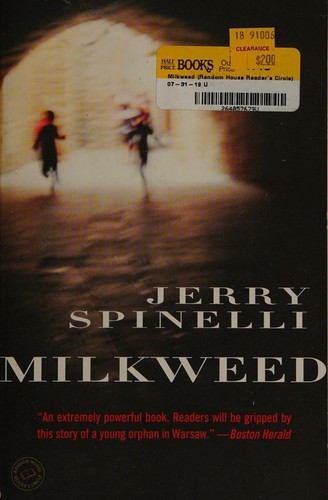
Milkweed Comprehension Questions & Reading Journal
3.9 out of 5, (9 ratings on Open Library)
Milkweed has 45 chapters · 224 pages
Free, no sign-up. Customise to reword questions or add your reader’s name.
Inside the journal: 45 chapter pages, one question each · 3 example answers · a cover for your reader’s name
Written for this book Questions about this story, good after any chapter.
What did you learn about Misha so far, and what questions do you still have about who he is?See all 45 questions ↓
About the book
He’s a boy called Jew. Gypsy. Stopthief. Runt. Happy. Fast. Filthy son of Abraham.
Buy the book on Amazon ↗ (affiliate link)
Milkweed questions by chapter
We know the book, its characters, setting and story, but not what happens in each chapter. So every question is written for this book, and any of them works wherever your reader has just stopped. One question per chapter, across all 45 chapters, and every one is editable before you print. The example answers under 3 of the chapters are the ones printed at the front of the booklet.
-
Chapter 1
What did you learn about Misha so far, and what questions do you still have about who he is?
-
Chapter 2
In this chapter, how does the setting of Warsaw affect what the characters can do or decide?
-
Chapter 3
Choose one word or phrase that helps show danger, fear, or confusion. What do you think it means, and how does it fit the scene?
-
Chapter 4
So far, what does Misha seem to believe about himself, and how might that belief change the way he acts?
-
Chapter 5
What does Uri teach Misha about surviving, and why might that lesson matter in wartime Warsaw?
-
Chapter 6
Which warning, rule, or piece of advice seems most important in this part of the story? Explain why.
-
Chapter 7
Names and labels matter in Milkweed. How do they affect the way Misha or another character is treated so far?
-
Chapter 8
Describe a moment from this chapter that made you feel worried, sad, angry, or hopeful. What caused that feeling?
-
Chapter 9
What does this chapter show about how war changes childhood for Misha, Janina, or another young character?
-
Chapter 10
What do Misha's choices in this chapter show about both his strengths and his weaknesses?
-
Chapter 11
How are the Nazis, sometimes called Jackboots by Misha, shown through what characters see, hear, or experience?
-
Chapter 12
What can you infer about Uri's feelings, even if he does not explain them directly?
-
Chapter 13
If Janina appears in this part, how does she respond to what is happening? If not, choose another child and explain their response.
-
Chapter 14
Food is very important in this book. What does food seem to mean in this chapter besides just something to eat?
Example answer: In this chapter, food seems to mean safety and survival. When Misha thinks about getting food, it shows how hard daily life is for him. Food also shows the difference between people who have power and people who are struggling. It made me realize that something ordinary can become very important during war.
-
Chapter 15
Make a prediction about one relationship in the story, such as Misha and Uri or Misha and Janina. What evidence supports your prediction?
-
Chapter 16
How does Misha's confusion or innocence help him in this chapter, and how might it put him in danger?
Example answer: Misha's innocence helps him because he does not always get scared in the same way other people do. He is willing to try things that might help him survive. But it also puts him in danger because he may not understand how serious the Nazis' rules and threats are. I think this makes me worry about him more.
-
Chapter 17
What small act of kindness or cruelty stood out to you in this chapter? Why was it important?
-
Chapter 18
If this chapter shows the Warsaw ghetto or another crowded place, how does that place change what people need, fear, or hope for?
-
Chapter 19
Which character seems bravest in this part of the book? Use details from the chapter to explain your thinking.
-
Chapter 20
Jerry Spinelli often uses short scenes and simple language. How did the writing style affect the mood or speed of this chapter?
-
Chapter 21
What does Misha want most right now, and what does that tell you about him?
-
Chapter 22
Compare Misha's view of events with the view of an older character. How are their understandings different?
-
Chapter 23
Choose an object, place, or action from this chapter that seems important. What larger idea might it represent?
-
Chapter 24
How does the idea of family, whether real or chosen, appear in this chapter or in the story so far?
-
Chapter 25
If you could ask Misha one question after reading this chapter, what would it be and why?
-
Chapter 26
How do rumors, stories, or beliefs influence what a character does in this part of the book?
-
Chapter 27
What does this chapter teach about prejudice, unfair treatment, or the way people are judged?
-
Chapter 28
Describe a time in this chapter when Misha misunderstands something or sees it differently from others. What does that show about him?
-
Chapter 29
Which decision in this chapter seems to have the biggest effect on the story? Explain your choice.
-
Chapter 30
How does fear change the way characters speak, move, or treat one another in this chapter?
-
Chapter 31
What does friendship cost or risk for a character in this part of Milkweed?
-
Chapter 32
Pick a powerful sentence, image, or scene from the chapter. Why did it stay in your mind?
-
Chapter 33
How does Janina's behavior compare with Misha's so far? Think about their choices, fears, or hopes.
-
Chapter 34
Where do you see hope in this chapter, even if the events are frightening or sad?
-
Chapter 35
How has Misha changed from the beginning of the book to this point? Use one example.
-
Chapter 36
What lesson about survival does this chapter seem to teach, and why might that lesson be hard to follow?
-
Chapter 37
How does Misha's innocent way of telling the story make the events feel more powerful or sad?
-
Chapter 38
If you could warn one character about something after this chapter, who would you warn and what would you say?
-
Chapter 39
In what ways does Warsaw during the Nazi occupation shape the main conflict in this part of the story?
-
Chapter 40
What does courage look like in this chapter? Give an example that is not just about fighting.
-
Chapter 41
Which theme feels strongest right now: identity, belonging, hope, cruelty, or survival? Explain your choice.
Example answer: The strongest theme right now is survival. Misha and the people around him have to think about staying safe, finding food, and making it through each day. Even when there are moments of friendship, danger is always nearby. This theme shows how war changes what matters most.
-
Chapter 42
How do memories, made-up stories, or stories about the past matter to Misha or another character?
-
Chapter 43
What prediction can you make about Misha's future based only on what you know so far?
-
Chapter 44
What unanswered question feels most important after this chapter, and why do you want to know the answer?
-
Chapter 45
After reading this chapter, what message do you think Jerry Spinelli wants readers to remember about people living through war?
More by Jerry Spinelli
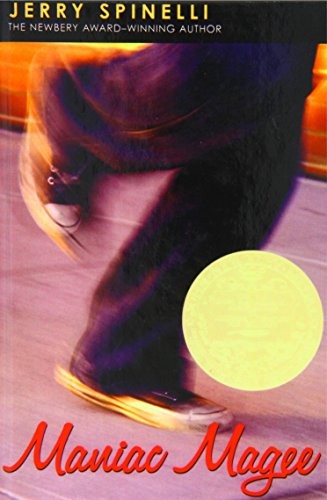
All 6 →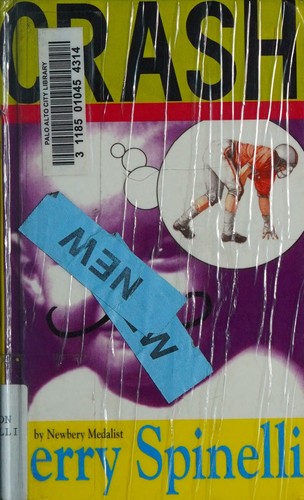
More ready-made journals
-
 The Truth About Stacey
-
 The Unlikely Tale of Chase and Finnegan
-
 The Unteachables
-
 The Westing Game
-
 The Wild Robot
-
 The Wild Robot Escapes
How to use this Milkweed reading journal
At home, as a discussion guide
After each chapter your reader writes a few lines on that chapter’s question. Read the answer together at bedtime: it shows what they understood and gives you something real to talk about, without a quiz.
In class, as a novel study
Print a class set (booklets fold from plain letter paper) and use one question per chapter as the reading-response or literature-circle prompt. The example answers at the front show what a full answer looks like.
Homeschool
One booklet covers the whole book, 45 chapters, so it doubles as the reading log for Milkweed. Reword any question before printing to match your reader.
Printing
The booklet PDF prints on ordinary 8.5 × 11 paper: print double-sided (flip on the short edge) at 100%, fold the stack in half and staple on the fold. There is also a one-page-per-sheet PDF and A5 binder pages.
Where the questions come from
Questions about this story, good after any chapter. We know the book, its characters, setting and story, but not what happens in each chapter. So every question is written for this book, and any of them works wherever your reader has just stopped. The questions were drafted with AI from what is known about the book and checked before publishing; every one is editable before you print.
Browse: All books by Jerry Spinelli