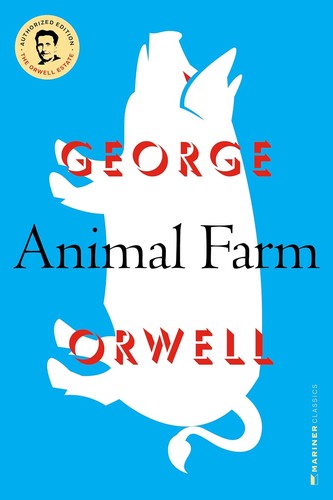
Animal Farm Comprehension Questions & Reading Journal
4.2 out of 5, (596 ratings on Open Library)
Animal Farm has 10 chapters · 128 pages
Animal Farm is a brilliant political satire and a powerful and affecting story of revolutions and idealism, power and corruption. 'All animals are equal.
Free, no sign-up. Customise to reword questions or add your reader’s name.
Inside the journal: 10 chapter pages, one question each · 3 example answers · a cover for your reader’s name
Chapter by chapter Each question is about its own chapter.
What dream does Old Major share with the animals, and why do you think it makes them feel hopeful?See all 10 questions ↓
About the book
Animal Farm is a brilliant political satire and a powerful and affecting story of revolutions and idealism, power and corruption. 'All animals are equal. But some animals are more equal than others.' Mr Jones of Manor Farm is so lazy and drunken that one day he forgets to feed his livestock. The ensuing rebellion under the leadership of the pigs Napoleon and Snowball leads to the animals taking over the farm.
Buy the book on Amazon ↗ (affiliate link)
Animal Farm questions by chapter
We know this book well. Every question asks about something that happens in its chapter, a moment, a choice or a character, without giving away what comes next. One question per chapter, across all 10 chapters, and every one is editable before you print. The example answers under 3 of the chapters are the ones printed at the front of the booklet.
-
Chapter 1
What dream does Old Major share with the animals, and why do you think it makes them feel hopeful?
-
Chapter 2
After the animals take over the farm, how do Snowball and Napoleon begin to show what kind of leaders they might become?
Example answer: I think Snowball shows that he likes to plan and teach because he helps paint the commandments and explains ideas to the other animals. Napoleon seems quieter, but he also seems like he wants control, especially when he takes the puppies away. To me, Snowball seems more interested in sharing ideas, while Napoleon seems more interested in gaining power. This makes me wonder if they will have trouble working together.
-
Chapter 3
The word “maxim” means a short saying or rule. Why do you think the pigs change the Seven Commandments into the maxim “Four legs good, two legs bad”?
-
Chapter 4
How do the animals work together during the Battle of the Cowshed, and what does this show about them?
-
Chapter 5
What prediction can you make about the farm after Snowball is chased away? Use details from the chapter to explain your thinking.
Example answer: I predict the farm will become less fair because Napoleon is now in charge by himself. He used the dogs to scare Snowball away, so the other animals may be afraid to disagree with him. Also, the meetings are stopped, which means the animals will not get to vote the same way. I think Napoleon will make more rules that help him instead of everyone.
-
Chapter 6
How does Napoleon explain the changes about trade and the farmhouse, and why might some animals accept his explanations?
-
Chapter 7
Which character do you feel most concerned about in this chapter, and what events make you feel that way?
-
Chapter 8
What lesson about power is shown when the commandments and stories about the battle keep changing?
-
Chapter 9
Boxer keeps working hard even when he is weak. What does his choice show about his character, and how do you feel about what happens to him?
Example answer: Boxer’s choice shows that he is loyal, brave, and very hardworking. He believes that if he works harder, he can help the farm, even when his body needs rest. I feel sad and angry about what happens to him because he trusted the leaders and deserved kindness. In my opinion, Boxer is one of the most caring animals in the story.
-
Chapter 10
By the end of the book, how has Animal Farm changed from Old Major’s dream, and what message do you think the author wants readers to understand?
More ready-made journals
How to use this Animal Farm reading journal
At home, as a discussion guide
After each chapter your reader writes a few lines on that chapter’s question. Read the answer together at bedtime: it shows what they understood and gives you something real to talk about, without a quiz.
In class, as a novel study
Print a class set (booklets fold from plain letter paper) and use one question per chapter as the reading-response or literature-circle prompt. The example answers at the front show what a full answer looks like.
Homeschool
One booklet covers the whole book, 10 chapters, so it doubles as the reading log for Animal Farm. Reword any question before printing to match your reader.
Printing
The booklet PDF prints on ordinary 8.5 × 11 paper: print double-sided (flip on the short edge) at 100%, fold the stack in half and staple on the fold. There is also a one-page-per-sheet PDF and A5 binder pages.
Where the questions come from
Each question is about its own chapter. We know this book well. Every question asks about something that happens in its chapter, a moment, a choice or a character, without giving away what comes next. The questions were drafted with AI from what is known about the book and checked before publishing; every one is editable before you print.