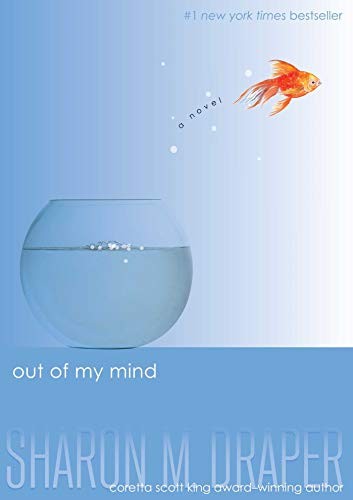
Out of my mind Comprehension Questions & Reading Journal
4.5 out of 5, (33 ratings on Open Library)
Out of my mind has 33 chapters · 315 pages
Eleven-year-old Melody has a photographic memory. Her head is like a video camera that is always recording.
Free, no sign-up. Customise to reword questions or add your reader’s name.
Inside the journal: 33 chapter pages, one question each · 3 example answers · a cover for your reader’s name
Chapter by chapter Each question is about its own chapter.
How does Melody describe words and thoughts, and what does this help you understand about her?See all 33 questions ↓
About the book
Eleven-year-old Melody has a photographic memory. Her head is like a video camera that is always recording. Always. And there's no delete button. She's the smartest kid in her whole school, but no one knows it. Most people — her teachers and doctors included — don't think she's capable of learning, and until recently her school days consisted of listening to the same preschool-level alphabet lessons again and again and again.
Buy the book on Amazon ↗ (affiliate link)
Out of my mind questions by chapter
We know this book well. Every question asks about something that happens in its chapter, a moment, a choice or a character, without giving away what comes next. One question per chapter, across all 33 chapters, and every one is editable before you print. The example answers under 3 of the chapters are the ones printed at the front of the booklet.
-
Chapter 1
How does Melody describe words and thoughts, and what does this help you understand about her?
-
Chapter 2
How do Melody’s parents react when the doctor underestimates her, and what does that show about them?
-
Chapter 3
What details show the difference between what people see when they look at Melody and who she really is inside?
-
Chapter 4
How does Mrs. V treat Melody differently from many other adults, and why might this be helpful for Melody?
Example answer: I think Mrs. V treats Melody like a real person with strong thoughts, not like someone who cannot learn. She is kind, but she also pushes Melody to try hard and not give up. This is helpful because Melody needs people to believe in her. Mrs. V helps Melody feel stronger and more confident.
-
Chapter 5
What is life like for Melody in room H-5, and how does it make her feel about school?
-
Chapter 6
Which classmate or teacher in H-5 stands out to you, and what does Melody’s description teach you about empathy?
-
Chapter 7
How does the incident with Mrs. Billups show why Melody gets frustrated when adults do not listen?
-
Chapter 8
What changes when Melody begins spending time with students outside H-5, and what challenges come with that change?
-
Chapter 9
How do the students in the regular classes react to Melody at first, and what do their reactions reveal about kindness and misunderstanding?
-
Chapter 10
How does Catherine help Melody have a stronger voice at school, and why is trust important between them?
-
Chapter 11
What does Melody notice about Rose, Molly, and Claire, and how do these girls affect her feelings about belonging?
-
Chapter 12
When Melody learns about technology that can speak for people, what prediction can you make about how it might change her life?
-
Chapter 13
Why is choosing words for Melody’s communication system so important, and what would you want to be able to say first?
-
Chapter 14
How does Melody’s new Medi-Talker change the way others see her? Use examples from the chapter.
Example answer: I think the Medi-Talker helps people finally understand that Melody has been smart all along. Before, many people judged her because she could not speak out loud. Now she can answer, joke, and share her ideas. It does not fix every problem, but it gives her a voice people can hear.
-
Chapter 15
What does the name and voice Melody chooses for her device tell you about her personality?
-
Chapter 16
How does Melody’s family react when they hear her speak with her device, and why is this moment meaningful?
-
Chapter 17
What new problems appear even after Melody gets a way to talk, and what theme does this show about fairness?
-
Chapter 18
How does Melody handle rude or uncomfortable moments with classmates, and what would you have done in her place?
-
Chapter 19
What do we learn about Mr. Dimming and the quiz team, and why does Melody want to try out?
-
Chapter 20
How does Melody prepare for the Whiz Kids tryout, and what does her preparation show about her character?
-
Chapter 21
What happens during the tryout, and how do people’s reactions show their assumptions about Melody?
-
Chapter 22
How does being chosen for the team affect Melody’s confidence and her relationships at school?
-
Chapter 23
What role do teamwork and practice play as the quiz team gets ready for competition?
-
Chapter 24
During the competition, how does Melody show what she knows, and how does the team respond?
-
Chapter 25
What does the team’s success mean to Melody, and how does it change what she hopes for next?
-
Chapter 26
How do reporters, classmates, and adults treat Melody after the win, and what do you think is fair or unfair about it?
-
Chapter 27
What goes wrong with the trip to Washington, D.C., and how does Melody try to make herself heard?
-
Chapter 28
Why is the airport scene so upsetting, and what does it reveal about the people on the team?
-
Chapter 29
After Melody is left behind, what emotions does she experience, and how can you tell from her actions?
-
Chapter 30
How does the accident with Penny connect to Melody’s struggle to communicate, and why is it such a tense moment?
-
Chapter 31
What does Melody learn about Penny’s condition, and how does her family show love during a frightening time?
-
Chapter 32
How do Melody’s classmates and teacher act when she returns, and what do you think Melody needs from them?
-
Chapter 33
At the end of the novel, how has Melody changed, and what message do you think the author wants readers to remember?
Example answer: I think Melody has become braver because she keeps going even after people hurt her feelings. She has learned that her voice matters, even when others do not listen the right way. The author wants readers to remember not to judge someone by how they look or move. Everyone has thoughts, feelings, and talents inside.
More by Sharon M. Draper
All 2 →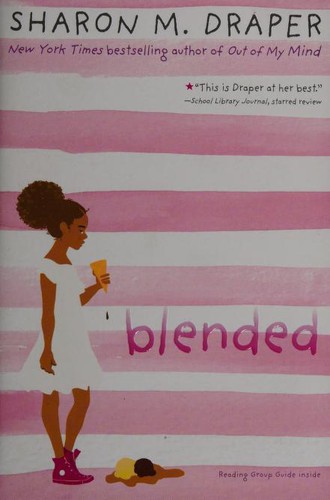
More ready-made journals





How to use this Out of my mind reading journal
At home, as a discussion guide
After each chapter your reader writes a few lines on that chapter’s question. Read the answer together at bedtime: it shows what they understood and gives you something real to talk about, without a quiz.
In class, as a novel study
Print a class set (booklets fold from plain letter paper) and use one question per chapter as the reading-response or literature-circle prompt. The example answers at the front show what a full answer looks like.
Homeschool
One booklet covers the whole book, 33 chapters, so it doubles as the reading log for Out of my mind. Reword any question before printing to match your reader.
Printing
The booklet PDF prints on ordinary 8.5 × 11 paper: print double-sided (flip on the short edge) at 100%, fold the stack in half and staple on the fold. There is also a one-page-per-sheet PDF and A5 binder pages.
Where the questions come from
Each question is about its own chapter. We know this book well. Every question asks about something that happens in its chapter, a moment, a choice or a character, without giving away what comes next. The questions were drafted with AI from what is known about the book and checked before publishing; every one is editable before you print.
Browse: All books by Sharon M. Draper