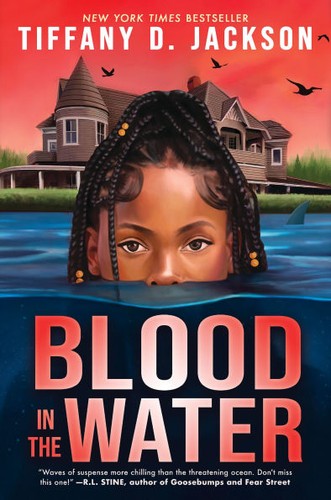
Blood in the Water Comprehension Questions & Reading Journal
Blood in the Water has 50 chapters · Grades 3–5
Free, no sign-up. Customise to reword questions or add your reader’s name.
Inside the journal: 50 chapter pages, one question each · 3 example answers · a cover for your reader’s name
Open-ended Thought-provoking questions for any chapter book.
What is the most important thing you learned in this chapter, and why does it seem important?See all 50 questions ↓
A printable reading journal for Blood in the Water: one question per chapter, with example answers.
Buy the book on Amazon ↗ (affiliate link)
Blood in the Water questions by chapter
We don’t know this book well enough to ask about its story, so these are open-ended prompts that get a reader thinking about the chapter they just finished: what happened, who changed, what they would do. One question per chapter, across all 50 chapters, and every one is editable before you print. The example answers under 3 of the chapters are the ones printed at the front of the booklet.
-
Chapter 1
What is the most important thing you learned in this chapter, and why does it seem important?
-
Chapter 2
Which moment in this chapter made you most curious about what might happen next? Explain your thinking.
-
Chapter 3
How does the setting in this chapter affect the characters or the events?
-
Chapter 4
What choice does a character make in this chapter, and what does that choice show about them?
-
Chapter 5
What new problem or challenge appears in this chapter? How might it affect the story?
-
Chapter 6
Choose one interesting word or phrase from this chapter. What do you think it means, and why did it stand out to you?
-
Chapter 7
How did your feelings about one character change during this chapter? Use details from the chapter to explain.
Example answer: At first, I did not trust one of the characters because they seemed like they were hiding something. During this chapter, I started to understand that they might have been scared instead of mean. A detail that changed my mind was how they reacted when things became difficult. Now I feel more curious about them and want to know what they will do next.
-
Chapter 8
What detail in this chapter might be a clue about something that will matter later?
-
Chapter 9
How does a relationship between two characters grow, weaken, or become more complicated in this chapter?
-
Chapter 10
Did anything in this chapter seem unfair to you? Describe what happened and why you felt that way.
-
Chapter 11
What mistake, misunderstanding, or risky action happens in this chapter? What could come from it?
-
Chapter 12
How does this chapter connect to the book’s title, cover, or main idea so far?
-
Chapter 13
What is the main conflict in this chapter? Is it a conflict between people, inside a character’s mind, or caused by the situation?
-
Chapter 14
Based on this chapter, what do you predict will happen next? Give at least two reasons for your prediction.
-
Chapter 15
Which character trait is easiest to see in this chapter? Explain how the character’s words or actions show it.
-
Chapter 16
What description helped you picture a person, place, or event clearly? Why was it effective?
-
Chapter 17
What lesson might a character be starting to learn in this chapter?
-
Chapter 18
What question would you ask the author or a character after reading this chapter? Why would you ask it?
-
Chapter 19
How does the dialogue in this chapter help you understand the characters better?
-
Chapter 20
What mood does this chapter create? Name the mood and describe two details that helped create it.
-
Chapter 21
What cause-and-effect connection can you find in this chapter? Explain what happened first and what happened because of it.
-
Chapter 22
When does a character act brave, careful, or unsure in this chapter? What makes you describe the character that way?
Example answer: I think the character acts brave when they face a problem instead of running away from it. They are not completely confident, but they still keep trying. That makes the moment feel realistic because bravery does not mean having no fear. It means doing what needs to be done even when you are nervous.
-
Chapter 23
How is this chapter similar to or different from an earlier chapter?
-
Chapter 24
What part of this chapter was confusing, mysterious, or hard to understand? What do you think it might mean?
-
Chapter 25
What object, place, or small detail seems important in this chapter? Explain why you noticed it.
-
Chapter 26
How does trust matter in this chapter? Who trusts whom, and does that trust seem strong or weak?
-
Chapter 27
Does this chapter move quickly or slowly? Explain how the author’s writing makes it feel that way.
-
Chapter 28
What is one clue, hint, or small piece of information you think readers should remember?
-
Chapter 29
What theme, such as friendship, family, courage, honesty, or justice, shows up in this chapter? How do you know?
-
Chapter 30
What is the strongest emotion a character feels in this chapter? What causes that emotion?
-
Chapter 31
If you were in one scene from this chapter, what would you do or say? Explain your choice.
-
Chapter 32
How does the ending of this chapter make you want to keep reading?
-
Chapter 33
What new information changes how you understand a character, problem, or event?
-
Chapter 34
How does keeping a secret or telling the truth affect someone in this chapter?
-
Chapter 35
Find a powerful verb or adjective from this chapter. How does it improve the writing?
-
Chapter 36
Does the main problem become harder or easier in this chapter? Use evidence from the chapter.
-
Chapter 37
How does the point of view affect what readers know or do not know in this chapter?
-
Chapter 38
What action surprised you most in this chapter? Why did it surprise you?
-
Chapter 39
What connection can you make between this chapter and your own life, another book, or the world?
-
Chapter 40
What decision in this chapter may have important consequences? What consequences do you imagine?
-
Chapter 41
Which scene from this chapter would be most exciting, scary, or emotional to see in a movie? Explain why.
Example answer: The scene I would most want to see in a movie is the one where the tension becomes very high. I could imagine the music getting louder and the camera showing the characters’ faces. It would be exciting because readers are waiting to see what choice the character will make. Seeing the setting and emotions on screen would make the moment feel even stronger.
-
Chapter 42
What are you hoping will happen after this chapter? Why do you want that to happen?
-
Chapter 43
How has a character changed since the beginning or an earlier part of the book? Give evidence.
-
Chapter 44
What message about doing the right thing under pressure appears in this chapter?
-
Chapter 45
Choose one sentence that feels important. Why does that sentence matter to the chapter or the story?
-
Chapter 46
What is one unanswered question you still have? What clues might help answer it?
-
Chapter 47
How does a secondary character help, hurt, or influence the main character in this chapter?
-
Chapter 48
Was this chapter satisfying, frustrating, exciting, or surprising? Explain your opinion with details.
-
Chapter 49
What evidence in this chapter shows that a character has grown, learned, or stayed the same?
-
Chapter 50
How does this chapter bring the story to a close, and what feeling are you left with?
Discussion questions for after Blood in the Water
Bigger questions for when the book is finished, each printed on its own ruled page at the end of the booklet.
- Think about the main character from the beginning to the end of the book. How did this character change, and what events or choices helped cause that change? Use several examples from different parts of the story.
- What do you think the book was really about beyond the main events of the plot? Explain one big theme or message you noticed, and describe how the author showed that idea through the characters, problems, and important moments.
Similar books for grades 3–5
-
 The First State of Being
-
 The Hero Two Doors Down
-
 The Hybrid Prince
-
 The last kids on Earth
-
 The library of unruly treasures
-
 The Lions' Run
How to use this Blood in the Water reading journal
At home, as a discussion guide
After each chapter your reader writes a few lines on that chapter’s question. Read the answer together at bedtime: it shows what they understood and gives you something real to talk about, without a quiz.
In class, as a novel study
Print a class set (booklets fold from plain letter paper) and use one question per chapter as the reading-response or literature-circle prompt. The example answers at the front show what a full answer looks like.
Homeschool
One booklet covers the whole book, 50 chapters, so it doubles as the reading log for Blood in the Water. Reword any question before printing to match your reader.
Printing
The booklet PDF prints on ordinary 8.5 × 11 paper: print double-sided (flip on the short edge) at 100%, fold the stack in half and staple on the fold. There is also a one-page-per-sheet PDF and A5 binder pages.
Where the questions come from
Thought-provoking questions for any chapter book. We don’t know this book well enough to ask about its story, so these are open-ended prompts that get a reader thinking about the chapter they just finished: what happened, who changed, what they would do. The questions were drafted with AI from what is known about the book and checked before publishing; every one is editable before you print.
Browse: 3rd grade books · 4th grade books · 5th grade books