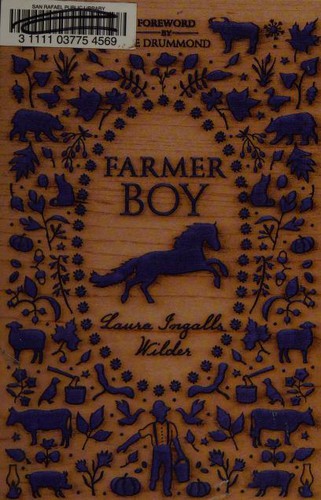
Farmer Boy Comprehension Questions & Reading Journal
3.8 out of 5, (23 ratings on Open Library)
Farmer Boy has 29 chapters · 372 pages
The first in the 'Little House' books. Describes Almanzo Wilder as a child growing up on a farm in rural New York from the time he is around 8 years old.
Free, no sign-up. Customise to reword questions or add your reader’s name.
Inside the journal: 29 chapter pages, one question each · 3 example answers · a cover for your reader’s name
Chapter by chapter Each question is about its own chapter.
In Chapter 1, Almanzo goes to school and faces the older boys who like to cause trouble. What does this chapter show about school rules and respect in Almanzo's time?See all 29 questions ↓
About the book
The first in the 'Little House' books. Describes Almanzo Wilder as a child growing up on a farm in rural New York from the time he is around 8 years old. Introduces all of Almanzo's family - parents, brothers and sisters.
Buy the book on Amazon ↗ (affiliate link)
Farmer Boy questions by chapter
We know this book well. Every question asks about something that happens in its chapter, a moment, a choice or a character, without giving away what comes next. One question per chapter, across all 29 chapters, and every one is editable before you print. The example answers under 3 of the chapters are the ones printed at the front of the booklet.
-
Chapter 1
In Chapter 1, Almanzo goes to school and faces the older boys who like to cause trouble. What does this chapter show about school rules and respect in Almanzo's time?
-
Chapter 2
In Chapter 2, the Wilder family spends a winter evening together at home. What details help you picture their house, work, and family life?
-
Chapter 3
In Chapter 3, the family gets ready for a cold winter night. Why is careful preparation so important for the Wilders?
-
Chapter 4
In Chapter 4, Almanzo receives a surprise that matters to him. How does the surprise affect him, and what does it show about what he values?
-
Chapter 5
In Chapter 5, Almanzo celebrates his birthday. How is his birthday different from birthdays today, and what parts would you enjoy or not enjoy?
-
Chapter 6
In Chapter 6, the family fills the ice-house. What steps do they take to store ice, and why is this job useful later in the year?
Example answer: First, the family cuts big blocks of ice and hauls them from the frozen water. Then they pack the blocks in the ice-house with sawdust so they will not melt quickly. This job is useful because they can keep food cold in warmer weather. I think it shows how much planning farm families had to do.
-
Chapter 7
In Chapter 7, Saturday night has special routines for the family. What do these routines tell you about cleanliness, responsibility, and getting ready for Sunday?
-
Chapter 8
In Chapter 8, the Wilder family observes Sunday in a quiet and serious way. How do their Sunday activities show their beliefs and values?
-
Chapter 9
In Chapter 9, Almanzo works with the calves. What does he learn about patience, courage, and handling animals?
-
Chapter 10
In Chapter 10, the year begins to change. What signs of the changing season does the author describe, and how do they affect farm life?
-
Chapter 11
In Chapter 11, spring brings new work and new excitement. Which spring activity seems most important to Almanzo, and why?
-
Chapter 12
In Chapter 12, the tin-peddler visits the Wilder home. What role do traveling sellers play in the family's life, and what makes the visit exciting?
-
Chapter 13
In Chapter 13, a strange dog appears. What clues help the characters decide whether the dog is a danger or a helper?
-
Chapter 14
In Chapter 14, the sheep are sheared. What does this chapter teach you about how people used animals and natural materials on a farm?
-
Chapter 15
In Chapter 15, a cold snap creates problems. How do the Wilders respond when the weather becomes dangerous, and what does this show about them?
-
Chapter 16
In Chapter 16, Almanzo experiences Independence Day. What does freedom mean in this chapter, and how do the celebrations help show it?
-
Chapter 17
In Chapter 17, summer brings heat, food, and farm work. How does the author use sensory details to make summertime feel real?
-
Chapter 18
In Chapter 18, the children help keep house while their parents are away. What mistakes or choices show that they are still learning to be responsible?
Example answer: The children try to do grown-up jobs, but they also make some poor choices when no adults are there to guide them. They get excited and do not always think about the consequences. This shows that being responsible is harder than just being left in charge. I think Almanzo learns that freedom comes with work and good judgment.
-
Chapter 19
In Chapter 19, early harvest begins. Why does harvesting take teamwork, and what jobs do different family members do?
-
Chapter 20
In Chapter 20, the late harvest keeps the family busy. How does the work in this chapter show the connection between effort now and survival later?
-
Chapter 21
In Chapter 21, Almanzo goes to the county fair. What does the fair reveal about what the community admires and celebrates?
-
Chapter 22
In Chapter 22, fall changes the farm again. How does the mood of the story shift as the family gets ready for colder weather?
-
Chapter 23
In Chapter 23, the cobbler comes to make shoes. What can you learn from this chapter about goods being handmade instead of bought quickly at a store?
-
Chapter 24
In Chapter 24, Almanzo wants to use the little bobsled. What might happen if he acts before he is ready, and what lesson do you think he may learn?
-
Chapter 25
In Chapter 25, threshing is hard and important work. What new vocabulary or farm words did you notice, and how can you figure out their meanings from the chapter?
-
Chapter 26
In Chapter 26, the family celebrates Christmas. What gifts or traditions seem most meaningful, and why do they matter to the characters?
-
Chapter 27
In Chapter 27, Almanzo helps with wood-hauling. How does this work test his strength, skill, or judgment?
-
Chapter 28
In Chapter 28, Mr. Thompson's pocketbook is important to the plot. How do honesty and trust affect the choices characters make in this chapter?
-
Chapter 29
In Chapter 29, Almanzo thinks about his future as a farmer. Do you think he is ready for more responsibility? Use details from the book to explain your opinion.
Example answer: I think Almanzo is becoming ready for more responsibility, but he still has more to learn. During the book, he works hard with animals, helps with harvesting, and learns from his father. He also makes mistakes, which shows he is still a boy. By the end, I think he truly wants to be a farmer and understands that it takes patience and effort.
More by Laura Ingalls Wilder
All 2 →
More ready-made journals
-
 Diary of a Wimpy Kid
-
 Diary of an Awesome Friendly Kid
-
 Diary of an Awesome Friendly Kid: Rowley Jefferson's Journal
-
 Dinosaurs Before Dark
-
 Dog Man
-
 Dog Man and Cat Kid
How to use this Farmer Boy reading journal
At home, as a discussion guide
After each chapter your reader writes a few lines on that chapter’s question. Read the answer together at bedtime: it shows what they understood and gives you something real to talk about, without a quiz.
In class, as a novel study
Print a class set (booklets fold from plain letter paper) and use one question per chapter as the reading-response or literature-circle prompt. The example answers at the front show what a full answer looks like.
Homeschool
One booklet covers the whole book, 29 chapters, so it doubles as the reading log for Farmer Boy. Reword any question before printing to match your reader.
Printing
The booklet PDF prints on ordinary 8.5 × 11 paper: print double-sided (flip on the short edge) at 100%, fold the stack in half and staple on the fold. There is also a one-page-per-sheet PDF and A5 binder pages.
Where the questions come from
Each question is about its own chapter. We know this book well. Every question asks about something that happens in its chapter, a moment, a choice or a character, without giving away what comes next. The questions were drafted with AI from what is known about the book and checked before publishing; every one is editable before you print.