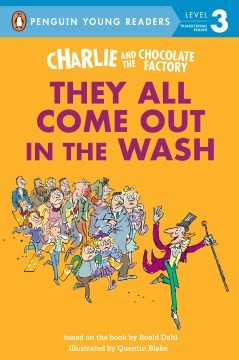
Charlie and the Chocolate Factory Comprehension Questions & Reading Journal
4.0 out of 5, (283 ratings on Open Library)
Charlie and the Chocolate Factory has 30 chapters · 174 pages
Free, no sign-up. Customise to reword questions or add your reader’s name.
Inside the journal: 30 chapter pages, one question each · 3 example answers · a cover for your reader’s name
Chapter by chapter Each question is about its own chapter.
In Chapter 1, what do you learn about Charlie Bucket’s home, family, and life? How does Roald Dahl help you feel what Charlie’s everyday life is like?See all 30 questions ↓
About the book
The story features the adventures of young Charlie Bucket inside the chocolate factory of eccentric chocolatier Willy Wonka.
Buy the book on Amazon ↗ (affiliate link)
Charlie and the Chocolate Factory questions by chapter
We know this book well. Every question asks about something that happens in its chapter, a moment, a choice or a character, without giving away what comes next. One question per chapter, across all 30 chapters, and every one is editable before you print. The example answers under 3 of the chapters are the ones printed at the front of the booklet.
-
Chapter 1
In Chapter 1, what do you learn about Charlie Bucket’s home, family, and life? How does Roald Dahl help you feel what Charlie’s everyday life is like?
Example answer: I learn that Charlie Bucket lives in a very small house with his parents and all four grandparents. His family is poor, and they do not have much food or space. Roald Dahl helps me feel Charlie’s life by describing the crowded house and how hungry Charlie often is. I also notice that the family loves each other, even though life is hard.
-
Chapter 2
In Chapter 2, Grandpa Joe tells Charlie about Mr. Willy Wonka’s factory. What details make the factory seem magical, mysterious, or amazing?
-
Chapter 3
In Chapter 3, what happens to Prince Pondicherry’s chocolate palace? What lesson might Roald Dahl want readers to notice in this funny story?
-
Chapter 4
In Chapter 4, why did Mr. Wonka close his factory, and what mystery remains after it opens again? How does this chapter build curiosity?
-
Chapter 5
In Chapter 5, Mr. Wonka announces the Golden Tickets. If you lived in Charlie’s town, how do you think this news would make people act, and why?
-
Chapter 6
In Chapter 6, Augustus Gloop and Veruca Salt find the first two Golden Tickets. What do their introductions show about their personalities and families?
-
Chapter 7
In Chapter 7, Charlie opens his birthday chocolate bar. How does this moment show both Charlie’s hope and his family’s love for him?
-
Chapter 8
In Chapter 8, Violet Beauregarde and Mike Teavee find Golden Tickets. How are these two children different from Charlie, based on what you have read so far?
-
Chapter 9
In Chapter 9, Grandpa Joe takes a gamble by buying another chocolate bar for Charlie. What does this choice show about Grandpa Joe’s character?
-
Chapter 10
In Chapter 10, the Bucket family’s hunger becomes even worse. Which details in this chapter help you understand how serious their situation is?
-
Chapter 11
In Chapter 11, Charlie finds money in the snow and buys chocolate. How does Dahl create excitement and suspense during Charlie’s visit to the shop?
-
Chapter 12
In Chapter 12, Charlie and his family read the Golden Ticket. What parts of the ticket’s message would make you feel most excited or nervous if you were Charlie?
-
Chapter 13
In Chapter 13, the visitors gather outside the factory gates. How does the crowd’s behavior show how famous and mysterious Willy Wonka’s factory is?
-
Chapter 14
In Chapter 14, Mr. Willy Wonka appears and welcomes the ticket winners. What first impression does he make on you, and what details support your thinking?
-
Chapter 15
In Chapter 15, the visitors enter the Chocolate Room. Which part of the room would amaze you the most, and why?
Example answer: The chocolate river would amaze me the most because it sounds huge and impossible. I can picture the waterfall mixing the chocolate and making the whole room smell delicious. I also think it is amazing that so much in the room is edible. It makes the factory feel like a place from a dream.
-
Chapter 16
In Chapter 16, Mr. Wonka explains who the Oompa-Loompas are and where they came from. What does this chapter add to your understanding of the factory?
-
Chapter 17
In Chapter 17, Augustus Gloop gets into trouble at the chocolate river. How do Augustus’s choices lead to what happens to him?
-
Chapter 18
In Chapter 18, the group travels down the chocolate river by boat. How does this scene change the mood of the story after Augustus’s accident?
-
Chapter 19
In Chapter 19, Mr. Wonka shows the Inventing Room and some of his unfinished creations. Why do you think he is so serious about visitors not touching anything?
-
Chapter 20
In Chapter 20, Violet Beauregarde wants to try the new chewing gum even after Mr. Wonka warns her. What does her decision reveal about her character?
-
Chapter 21
In Chapter 21, Violet changes after chewing the gum. How do the Oompa-Loompas’ song and Mr. Wonka’s reaction help readers think about Violet’s behavior?
-
Chapter 22
In Chapter 22, the group walks along the corridor and sees many strange rooms and inventions. Which invention or room name made you most curious, and what do you imagine it might be like?
-
Chapter 23
In Chapter 23, the visitors see the square candies that look round. How does this chapter use wordplay or a joke to make the factory feel surprising?
-
Chapter 24
In Chapter 24, Veruca Salt enters the Nut Room because she wants one of Mr. Wonka’s squirrels. How does this event connect to what you already know about Veruca?
Example answer: This event connects to Veruca’s personality because she is used to getting whatever she wants right away. She does not listen when Mr. Wonka tells her she cannot have a squirrel. Instead, she acts like the rules do not matter to her. Her choice shows that being spoiled can lead to trouble.
-
Chapter 25
In Chapter 25, the group rides in the Great Glass Elevator. How is this elevator different from an ordinary one, and what does it show about Mr. Wonka’s imagination?
-
Chapter 26
In Chapter 26, Mr. Wonka explains his idea for television chocolate. What makes this invention exciting, and what makes it risky?
-
Chapter 27
In Chapter 27, Mike Teavee uses Mr. Wonka’s television invention. How does Mike’s love of television affect the choice he makes in this chapter?
-
Chapter 28
In Chapter 28, Mr. Wonka realizes that Charlie is the only child left on the tour. What emotions do you think Charlie and Grandpa Joe might feel at this moment, and why?
-
Chapter 29
In Chapter 29, the other children leave the factory after their accidents. What do their changes show about the consequences of their choices?
-
Chapter 30
In Chapter 30, Mr. Wonka explains what Charlie has won. Why is this ending especially meaningful for Charlie and his family?
Discussion questions for after Charlie and the Chocolate Factory
Bigger questions for when the book is finished, each printed on its own ruled page at the end of the booklet.
- After finishing the book, how does Charlie Bucket show what kind of person he is from the beginning of the story to the end? Use important moments from the whole book to explain your answer.
- What do you think Roald Dahl wanted readers to understand about greed, kindness, and self-control in Charlie and the Chocolate Factory? Choose at least two characters and explain how their actions help show the book’s message.
More by Roald Dahl
All 4 →
More ready-made journals
-
 Bad Guys
-
 Bad Guys in Attack of the Zittens
-
 Because of Winn-Dixie
-
 Before we were free
-
 Best Friends Furever (Love Puppies #1)
-
 Big Nate, say good-bye to dork city
How to use this Charlie and the Chocolate Factory reading journal
At home, as a discussion guide
After each chapter your reader writes a few lines on that chapter’s question. Read the answer together at bedtime: it shows what they understood and gives you something real to talk about, without a quiz.
In class, as a novel study
Print a class set (booklets fold from plain letter paper) and use one question per chapter as the reading-response or literature-circle prompt. The example answers at the front show what a full answer looks like.
Homeschool
One booklet covers the whole book, 30 chapters, so it doubles as the reading log for Charlie and the Chocolate Factory. Reword any question before printing to match your reader.
Printing
The booklet PDF prints on ordinary 8.5 × 11 paper: print double-sided (flip on the short edge) at 100%, fold the stack in half and staple on the fold. There is also a one-page-per-sheet PDF and A5 binder pages.
Where the questions come from
Each question is about its own chapter. We know this book well. Every question asks about something that happens in its chapter, a moment, a choice or a character, without giving away what comes next. The questions were drafted with AI from what is known about the book and checked before publishing; every one is editable before you print.
Browse: All books by Roald Dahl