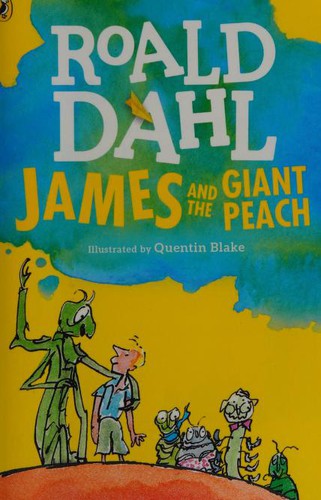
James and the Giant Peach Comprehension Questions & Reading Journal
3.9 out of 5, (137 ratings on Open Library)
James and the Giant Peach has 39 chapters · 144 pages
Free, no sign-up. Customise to reword questions or add your reader’s name.
Inside the journal: 39 chapter pages, one question each · 3 example answers · a cover for your reader’s name
Written for this book Questions about this story, good after any chapter.
At this point, what do you know about James Henry Trotter’s life, and what detail makes you feel most strongly about him?See all 39 questions ↓
About the book
Roald Dahl's first and most widely celebrated book for young people continues to thrill readers around the world.
Buy the book on Amazon ↗ (affiliate link)
James and the Giant Peach questions by chapter
We know the book, its characters, setting and story, but not what happens in each chapter. So every question is written for this book, and any of them works wherever your reader has just stopped. One question per chapter, across all 39 chapters, and every one is editable before you print. The example answers under 3 of the chapters are the ones printed at the front of the booklet.
-
Chapter 1
At this point, what do you know about James Henry Trotter’s life, and what detail makes you feel most strongly about him?
-
Chapter 2
How does Roald Dahl make Aunt Sponge and Aunt Spiker seem unfair or cruel in the chapter you read?
-
Chapter 3
Which words or descriptions in this chapter help you picture the setting around James?
-
Chapter 4
What choice, action, or surprise in this chapter changes James’s situation the most so far?
-
Chapter 5
If James could speak honestly to the grown-ups around him right now, what do you think he would say, and why?
-
Chapter 6
What is one strange or magical detail you noticed, and how does it affect the mood of the story?
-
Chapter 7
How are James’s feelings changing so far, and what evidence from the text shows that change?
-
Chapter 8
What do you think the peach might represent for James at this point: danger, hope, freedom, or something else? Explain.
Example answer: I think the peach represents hope for James. His life has been lonely and unfair, but the peach is strange and exciting, so it feels like a chance for something new. It might also be a little dangerous because James does not fully understand it yet. Still, I think it gives him a reason to believe his life can change.
-
Chapter 9
Choose one important descriptive word from this chapter. What does it mean, and why do you think Dahl chose it?
-
Chapter 10
How does the chapter build suspense or make you want to keep reading?
-
Chapter 11
Which character seems to have the most power in this part of the story, and how do they use it?
-
Chapter 12
What problem is James facing now, and what possible solution can you imagine?
-
Chapter 13
When Dahl uses humor in this chapter, what makes it funny: exaggeration, silly language, odd behavior, or something else?
-
Chapter 14
Describe one way the story feels like a fairy tale or fantasy so far.
-
Chapter 15
What is something James learns about the peach, the insects, or his world in this chapter?
-
Chapter 16
Pick one of James’s insect companions you have met so far. What personality traits does that character show?
-
Chapter 17
How do the creatures James meets treat him differently from Aunt Sponge and Aunt Spiker?
-
Chapter 18
What does this chapter show about friendship or teamwork?
-
Chapter 19
What new danger, worry, or challenge appears in this chapter, and how do the characters respond?
-
Chapter 20
How does Centipede’s personality affect the group in the part you read?
-
Chapter 21
What do you notice about Earthworm’s fears or complaints, and do you think they are reasonable?
-
Chapter 22
How does the Old-Green-Grasshopper help create a calmer or wiser feeling in the story?
-
Chapter 23
What role does Miss Spider, Ladybug, Glow-worm, or Silkworm play in helping the group so far?
Example answer: Miss Spider helps the group by using her web-making skills. She is useful because she can do things the others cannot do in the same way. I also think she shows that a creature who looks scary can actually be kind and important. Her role helps the group work together better.
-
Chapter 24
How does the setting inside or around the giant peach affect what the characters can do?
-
Chapter 25
What prediction can you make about where the peach will go next or how James will solve the current problem?
-
Chapter 26
What moment in this chapter shows courage, even if the character is scared?
-
Chapter 27
How does Dahl make an impossible event seem exciting or believable enough for the story?
-
Chapter 28
What is one example of teamwork in this chapter, and why could no one character solve the problem alone?
-
Chapter 29
Which character’s point of view do you understand best right now, and what helped you understand it?
-
Chapter 30
What lesson about judging others by their appearance could a reader take from the insect characters?
-
Chapter 31
Find a moment when a character uses quick thinking. What was the problem, and why was the idea clever?
-
Chapter 32
How does the author use size—tiny insects, a giant peach, or huge dangers—to make the adventure more interesting?
-
Chapter 33
What would you ask James if you could interview him after this chapter?
-
Chapter 34
Which part of the chapter would make the best illustration, and what details would you include?
-
Chapter 35
How has James changed from the beginning of the book to this point?
-
Chapter 36
What does the chapter suggest about the difference between a real family and people who only share a house?
-
Chapter 37
Was there a decision in this chapter that you agreed or disagreed with? Explain your thinking.
-
Chapter 38
How does the story balance scary moments with funny or hopeful moments?
-
Chapter 39
Looking back over the whole book, what message do you think Roald Dahl wants readers to remember about kindness, bravery, or adventure?
Example answer: I think Roald Dahl wants readers to remember that kindness can make people feel less alone. James has to be brave many times, but he is stronger when he has friends with him. The adventure shows that scary changes can lead to a better life. To me, the book’s message is that courage and friendship can help you escape a bad situation.
More by Roald Dahl
All 4 →
More ready-made journals
-
 Afternoon on the Amazon
-
 Alice with a Why
-
 All the Blues in the Sky
-
 All the Impossible Things
-
 Allies
-
 Amina's voice
How to use this James and the Giant Peach reading journal
At home, as a discussion guide
After each chapter your reader writes a few lines on that chapter’s question. Read the answer together at bedtime: it shows what they understood and gives you something real to talk about, without a quiz.
In class, as a novel study
Print a class set (booklets fold from plain letter paper) and use one question per chapter as the reading-response or literature-circle prompt. The example answers at the front show what a full answer looks like.
Homeschool
One booklet covers the whole book, 39 chapters, so it doubles as the reading log for James and the Giant Peach. Reword any question before printing to match your reader.
Printing
The booklet PDF prints on ordinary 8.5 × 11 paper: print double-sided (flip on the short edge) at 100%, fold the stack in half and staple on the fold. There is also a one-page-per-sheet PDF and A5 binder pages.
Where the questions come from
Questions about this story, good after any chapter. We know the book, its characters, setting and story, but not what happens in each chapter. So every question is written for this book, and any of them works wherever your reader has just stopped. The questions were drafted with AI from what is known about the book and checked before publishing; every one is editable before you print.
Browse: All books by Roald Dahl