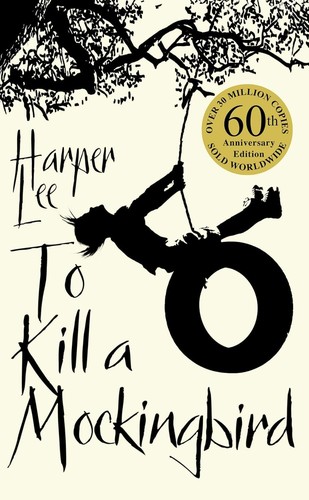
To Kill a Mockingbird Comprehension Questions & Reading Journal
4.1 out of 5, (273 ratings on Open Library)
To Kill a Mockingbird has 31 chapters · 320 pages
One of the best-loved stories of all time, To Kill a Mockingbird has been translated into more than 40 languages, sold more than 30 million copies worldwide, served as the basis for an enormously popular motion picture, and voted one of…
Free, no sign-up. Customise to reword questions or add your reader’s name.
Inside the journal: 31 chapter pages, one question each · 3 example answers · a cover for your reader’s name
Chapter by chapter Each question is about its own chapter.
What do you learn about Scout, Jem, Dill, and the town of Maycomb in this first chapter? How does the way people talk about Boo Radley make you curious about him?See all 31 questions ↓
About the book
One of the best-loved stories of all time, To Kill a Mockingbird has been translated into more than 40 languages, sold more than 30 million copies worldwide, served as the basis for an enormously popular motion picture, and voted one of the best novels of the 20th century by librarians across the United States.
Buy the book on Amazon ↗ (affiliate link)
To Kill a Mockingbird questions by chapter
We know this book well. Every question asks about something that happens in its chapter, a moment, a choice or a character, without giving away what comes next. One question per chapter, across all 31 chapters, and every one is editable before you print. The example answers under 3 of the chapters are the ones printed at the front of the booklet.
-
Chapter 1
What do you learn about Scout, Jem, Dill, and the town of Maycomb in this first chapter? How does the way people talk about Boo Radley make you curious about him?
-
Chapter 2
Scout is excited to start school, but her first day does not go the way she hopes. Why does she feel misunderstood by Miss Caroline, and what does this show about Scout?
-
Chapter 3
Atticus tells Scout to try to see things from another person's point of view. How could this advice help Scout at school or at home?
Example answer: I think Atticus's advice could help Scout not get angry so quickly. If she thinks about why Miss Caroline is confused, she might understand that her teacher is new and does not know Maycomb yet. This advice could also help me because sometimes people act in a way I do not understand at first. If I try to see their side, I might be kinder and solve the problem better.
-
Chapter 4
Scout and Jem find surprises in the knothole of the tree. What do these gifts make you wonder about the person leaving them?
-
Chapter 5
Miss Maudie explains some things about Boo Radley that are different from the children's rumors. How does she help Scout think about Boo in a new way?
-
Chapter 6
Jem goes back to the Radley place to get his pants. What does this choice show about Jem's personality, and do you think he made the right decision?
-
Chapter 7
Jem and Scout keep finding gifts in the tree, but then the knothole is filled with cement. How do you think Jem feels, and why is this moment important?
-
Chapter 8
During the fire at Miss Maudie's house, someone quietly puts a blanket around Scout. What does this event suggest about Boo Radley?
-
Chapter 9
Scout gets angry when people insult Atticus for defending Tom Robinson. What does Atticus want Scout to learn about courage and self-control?
-
Chapter 10
Atticus says it is a sin to kill a mockingbird because mockingbirds only make music for others. What do you think the mockingbird might symbolize in the story?
Example answer: I think the mockingbird stands for innocent people who do not hurt anyone. A mockingbird just sings, so hurting it would be cruel and unfair. In the story, some characters are treated badly even though they are gentle or kind. This symbol helps me notice when the world of the book is not fair.
-
Chapter 11
Atticus says Mrs. Dubose was brave even though she was often mean to Jem and Scout. What kind of courage does Mrs. Dubose show?
-
Chapter 12
Scout and Jem visit Calpurnia's church and see a different part of Maycomb. What do they learn about Calpurnia and her community?
-
Chapter 13
Aunt Alexandra comes to live with the Finch family and talks a lot about family background. How is her view of what makes a person important different from Atticus's view?
-
Chapter 14
Dill runs away and comes to Scout's house. What might Dill's actions tell us about how he is feeling and what he needs from others?
-
Chapter 15
Scout speaks to Mr. Cunningham outside the jail, and the angry crowd leaves. Why do you think Scout's simple words make such a big difference?
-
Chapter 16
Many people come to town for Tom Robinson's trial. What does the crowd's behavior show about Maycomb and how important the trial is?
-
Chapter 17
In the courtroom, Heck Tate and Bob Ewell tell what they say happened. What details seem important, and what questions do they make you ask?
-
Chapter 18
Mayella Ewell gives her testimony and seems both lonely and scared. How does the author help you feel more than one emotion about Mayella?
-
Chapter 19
Tom Robinson tells his side of the story. What does his testimony help you understand about him and about the unfairness he faces?
-
Chapter 20
Atticus gives his closing speech to the jury. What main message is he trying to make them understand?
-
Chapter 21
The jury says Tom Robinson is guilty. How do Scout, Jem, and the people in the balcony react, and what does this tell you about the verdict?
-
Chapter 22
After the trial, Miss Maudie talks to Jem and Scout about people who tried to help. How does she give them hope even after something unfair happened?
-
Chapter 23
Atticus explains more about the trial, the jury, and Bob Ewell's anger. What does this chapter teach Jem and Scout about fairness and growing up?
-
Chapter 24
Aunt Alexandra's group talks about helping people far away, but they ignore unfairness close to home. What lesson about hypocrisy, or saying one thing and doing another, can you find in this chapter?
-
Chapter 25
People in Maycomb react to Tom Robinson's death in different ways. What do their reactions show about kindness, prejudice, and responsibility?
-
Chapter 26
Scout thinks about Boo Radley again and notices unfair thinking at school. How does this chapter show that people can miss unfairness when it is close to them?
-
Chapter 27
Bob Ewell causes trouble for several people, and the Halloween pageant is planned. What clues in this chapter make you predict that something dangerous may happen?
-
Chapter 28
Scout and Jem are attacked on the way home from the pageant. How does the author build fear and confusion in this scene?
-
Chapter 29
Scout explains what happened during the attack and realizes Boo Radley is in the room. How does this moment change the way she sees Boo?
-
Chapter 30
Heck Tate and Atticus disagree about what to say happened to Bob Ewell. Why does Scout understand that protecting Boo is the right thing to do?
-
Chapter 31
Scout stands on Boo Radley's porch and sees the neighborhood from his point of view. How has Scout changed from the beginning of the book to the end?
Example answer: At the beginning, Scout mostly thinks of Boo as a scary mystery because that is what the children imagine. By the end, she understands that Boo is a real person with feelings. When she stands on his porch, she finally does what Atticus taught her and sees the world from someone else's view. I think Scout has become more thoughtful and more grown-up.
More ready-made journals
-
 New Kid
-
 Night of the Ninjas
-
 No Place on Earth
-
 Nothing but the Truth
-
 Nuestra América
-
 Number the Stars
How to use this To Kill a Mockingbird reading journal
At home, as a discussion guide
After each chapter your reader writes a few lines on that chapter’s question. Read the answer together at bedtime: it shows what they understood and gives you something real to talk about, without a quiz.
In class, as a novel study
Print a class set (booklets fold from plain letter paper) and use one question per chapter as the reading-response or literature-circle prompt. The example answers at the front show what a full answer looks like.
Homeschool
One booklet covers the whole book, 31 chapters, so it doubles as the reading log for To Kill a Mockingbird. Reword any question before printing to match your reader.
Printing
The booklet PDF prints on ordinary 8.5 × 11 paper: print double-sided (flip on the short edge) at 100%, fold the stack in half and staple on the fold. There is also a one-page-per-sheet PDF and A5 binder pages.
Where the questions come from
Each question is about its own chapter. We know this book well. Every question asks about something that happens in its chapter, a moment, a choice or a character, without giving away what comes next. The questions were drafted with AI from what is known about the book and checked before publishing; every one is editable before you print.