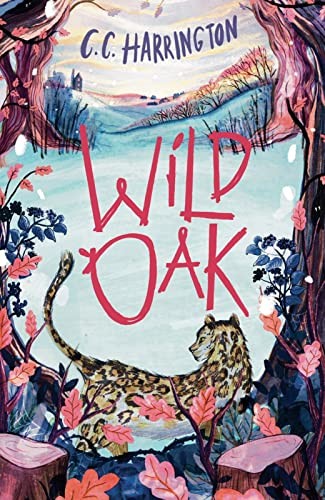
Wildoak Comprehension Questions & Reading Journal
Wildoak has 54 chapters · Grades 3–5 · 330 pages
Free, no sign-up. Customise to reword questions or add your reader’s name.
Inside the journal: 54 chapter pages, one question each · 3 example answers · a cover for your reader’s name
Open-ended Thought-provoking questions for any chapter book.
What seems most important in Maggie's world so far? Describe a detail that helped you decide.See all 54 questions ↓
A printable reading journal for Wildoak: one question per chapter, with example answers.
Buy the book on Amazon ↗ (affiliate link)
Wildoak questions by chapter
We don’t know this book well enough to ask about its story, so these are open-ended prompts that get a reader thinking about the chapter they just finished: what happened, who changed, what they would do. One question per chapter, across all 54 chapters, and every one is editable before you print. The example answers under 3 of the chapters are the ones printed at the front of the booklet.
-
Chapter 1
What seems most important in Maggie's world so far? Describe a detail that helped you decide.
-
Chapter 2
How does the setting shape the story so far? Explain how the surroundings affect a character's feelings or choices.
-
Chapter 3
Which character do you understand best at this point, and what has helped you understand that character?
-
Chapter 4
What are you beginning to notice about how people respond to Maggie's stutter?
-
Chapter 5
Which word in your reading helped you picture the natural world? Explain what it means and why it works well.
-
Chapter 6
What question about Maggie, Rumpus, or the woods would you most like the story to answer? Explain why it matters to you.
-
Chapter 7
How does the story so far show the difference between having trouble speaking and having nothing to say?
-
Chapter 8
Describe a problem that is still unfinished in your reading. Why might it be difficult to solve?
-
Chapter 9
Based on what you know so far, what do you predict Maggie will need most: courage, help, or patience? Explain your choice.
Example answer: I predict Maggie will need patience most. She has a stutter, so I think it matters that other people give her time to speak. I also think she may need to be patient with herself when speaking feels hard. Courage and help could matter too, but patience would give her room to use them.
-
Chapter 10
Which detail has made the world of Wildoak feel real to you? Explain how that detail adds to the story.
-
Chapter 11
What have you learned so far about what makes Maggie feel comfortable or uncomfortable?
-
Chapter 12
Choose a word that describes the mood of your latest reading. Which details support your choice?
-
Chapter 13
Where do you notice a need for kindness in the story so far? Explain what a kind response might look like.
-
Chapter 14
If you could ask Maggie one question about what you have read, what would you ask, and why?
-
Chapter 15
How has the author helped you understand an animal's needs or feelings so far? If that part of the story is still ahead, what are you wondering about Rumpus?
-
Chapter 16
Which choice in the story so far would you like to discuss with its character? Explain what you would say.
-
Chapter 17
What difference do you notice between how a character feels inside and what others can see from the outside?
-
Chapter 18
What might make the woods in Cornwall feel welcoming, frightening, or both? Use details available in your reading so far.
-
Chapter 19
Find a strong action word in your latest reading. How would the scene change if the author used a weaker word?
-
Chapter 20
What have you noticed about trust so far? Explain how someone earns it, risks it, or needs it.
-
Chapter 21
Which character might see the current situation differently from Maggie? Explain that possible point of view.
-
Chapter 22
What does safety seem to mean in Wildoak so far? Discuss whose safety you are thinking about and why.
-
Chapter 23
How does your latest reading connect to something you already know about people, animals, or forests?
-
Chapter 24
Which detail from an earlier part of your reading seems more important now? Explain what made you notice it again.
-
Chapter 25
What are you learning about the kind of support Maggie needs? Explain how support can differ from simply telling someone what to do.
-
Chapter 26
Where might a misunderstanding cause trouble in the story? Base your prediction on what you have read.
-
Chapter 27
What responsibilities do you think people have toward an animal like Rumpus? Connect your opinion to the story so far.
Example answer: I think people should learn what an animal needs instead of treating it like a toy. Rumpus is a snow leopard, so his needs would be different from a pet cat's. I would want people to think about his safety and give him suitable care. Caring about an animal should mean doing what is good for it, not just what makes a person happy.
-
Chapter 28
Choose an unfamiliar word from your reading. What clues around it help you work out its meaning?
-
Chapter 29
What does the story suggest so far about judging someone too quickly? Explain with a detail you noticed.
-
Chapter 30
Which relationship are you most curious to learn more about? Explain what makes it interesting at this point.
-
Chapter 31
How does the author help you care about Maggie without needing her to explain every feeling aloud?
-
Chapter 32
What would you tell a new reader about the main difficulty in your reading so far, without revealing more than necessary?
-
Chapter 33
Which small detail about the woods, an animal, or a person deserves a closer look? Explain what it might help readers understand.
-
Chapter 34
What do you expect could happen if a character ignores another living thing's needs? Use the story so far to support your thinking.
-
Chapter 35
How has your opinion of one character changed since that character first appeared? If it has not changed, explain what has kept it steady.
-
Chapter 36
Where do you see a difference between being alone and feeling lonely in your reading so far?
-
Chapter 37
Pick a sentence whose sound or rhythm caught your attention. How does the writing help create a feeling in Wildoak?
-
Chapter 38
What have you learned about Fred so far? If you have not met him yet, explain what you hope to learn about Maggie's family.
-
Chapter 39
Which worry in the story feels most understandable to you? Explain why, using what you know at this point.
-
Chapter 40
What could a character gain by being more patient in the current situation? Explain how patience might help.
-
Chapter 41
How is listening important in the story so far, even when no one is speaking?
-
Chapter 42
What would you want to protect in the world of Wildoak at this point? Explain why it matters and what protecting it might require.
-
Chapter 43
Which two characters seem different but may share a need or feeling? Explain your comparison using your reading so far.
-
Chapter 44
What new challenge seems possible after your latest reading? Describe the clues behind your prediction.
-
Chapter 45
How do the descriptions of nature affect your reading experience so far? Explain whether they calm you, worry you, make you curious, or create another feeling.
-
Chapter 46
Consider the title Wildoak alongside your reading so far. What ideas or feelings do the words 'wild' and 'oak' bring to mind?
Example answer: The word 'wild' makes me think of animals living freely and places people do not control. The word 'oak' makes me picture a strong tree that shelters many living things. Together, the words make me expect nature to matter a lot in this story. I think the title also suggests that something can be both strong and in need of protection.
-
Chapter 47
What does courage look like in the story at this point? Explain whether it must be loud or easy to notice.
-
Chapter 48
Which part of your latest reading would you most like to see illustrated? Describe what the picture should show and why.
-
Chapter 49
What have you learned about the difference between helping a living thing and trying to control it?
-
Chapter 50
How might the setting in Cornwall make this story different from a story set in a busy city? Use details you have read rather than guessing future events.
-
Chapter 51
What advice would you offer someone who wants to understand Maggie better? Explain what your reading has taught you.
-
Chapter 52
Which unanswered question is creating the most suspense for you now? Explain how the author keeps you interested in it.
-
Chapter 53
What connection between people and the natural world is becoming clearer to you? Support your thinking with a detail from your reading.
-
Chapter 54
Looking back over only what you have read so far, what idea about finding your voice seems worth remembering? Explain how Wildoak has helped you think about it.
Discussion questions for after Wildoak
Bigger questions for when the book is finished, each printed on its own ruled page at the end of the booklet.
- How does Maggie change throughout Wildoak, and what helps bring about that change? Discuss the importance of her connections with Rumpus, Fred, and the natural world. Use details from different parts of the book to explain what she learns about herself and what others need to understand about her.
- Wildoak invites readers to think about how people treat both other people and animals. What do you think the whole story says about listening, kindness, and protection? Develop your answer with moments from Maggie's and Rumpus's stories, and explain which idea you will carry with you after finishing the book.
Similar books for grades 3–5
-
 Karen's New Year.
-
 Kiki and the New Magic
-
 Kiki's Delivery Service
-
 Kristy's Big Day
-
 Kristy's Great Idea
-
 Leon the Extraordinary
How to use this Wildoak reading journal
At home, as a discussion guide
After each chapter your reader writes a few lines on that chapter’s question. Read the answer together at bedtime: it shows what they understood and gives you something real to talk about, without a quiz.
In class, as a novel study
Print a class set (booklets fold from plain letter paper) and use one question per chapter as the reading-response or literature-circle prompt. The example answers at the front show what a full answer looks like.
Homeschool
One booklet covers the whole book, 54 chapters, so it doubles as the reading log for Wildoak. Reword any question before printing to match your reader.
Printing
The booklet PDF prints on ordinary 8.5 × 11 paper: print double-sided (flip on the short edge) at 100%, fold the stack in half and staple on the fold. There is also a one-page-per-sheet PDF and A5 binder pages.
Where the questions come from
Thought-provoking questions for any chapter book. We don’t know this book well enough to ask about its story, so these are open-ended prompts that get a reader thinking about the chapter they just finished: what happened, who changed, what they would do. The questions were drafted with AI from what is known about the book and checked before publishing; every one is editable before you print.
Browse: 3rd grade books · 4th grade books · 5th grade books