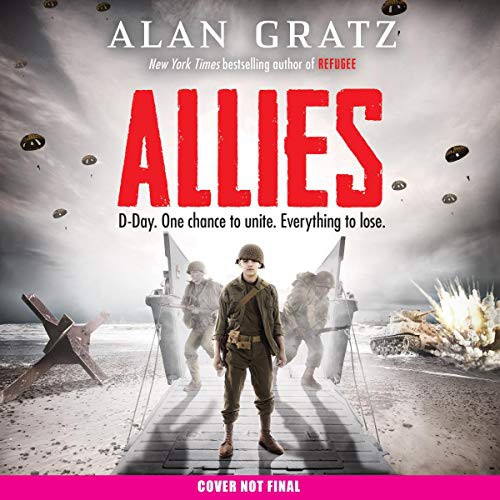
Allies Comprehension Questions & Reading Journal
Allies has 86 chapters
Free, no sign-up. Customise to reword questions or add your reader’s name.
Inside the journal: 86 chapter pages, one question each · 3 example answers · a cover for your reader’s name
Written for this book Questions about this story, good after any chapter.
What details in this chapter help you understand that Allies is set during World War II and the D-Day invasion?See all 86 questions ↓
A printable reading journal for Allies: one question per chapter, with example answers.
Buy the book on Amazon ↗ (affiliate link)
Allies questions by chapter
We know the book, its characters, setting and story, but not what happens in each chapter. So every question is written for this book, and any of them works wherever your reader has just stopped. One question per chapter, across all 86 chapters, and every one is editable before you print. The example answers under 3 of the chapters are the ones printed at the front of the booklet.
-
Chapter 1
What details in this chapter help you understand that Allies is set during World War II and the D-Day invasion?
-
Chapter 2
Which character's point of view did you follow in this chapter, and what did you learn from seeing the war through that person's eyes?
-
Chapter 3
What new detail about D-Day, Normandy, or the Allied forces did this chapter add to your understanding of the story so far?
-
Chapter 4
How does the setting in or near Normandy affect what the characters can do in this chapter?
-
Chapter 5
What words or phrases in this chapter helped create the mood, such as fear, hope, confusion, or excitement?
-
Chapter 6
What difficult choice does a character face in this chapter, and why is it not an easy decision?
-
Chapter 7
So far, how does Dee Carpenter show that he is carrying more than one kind of burden during the invasion?
-
Chapter 8
What does Samira Zidane show about courage, loyalty, or resistance in the parts of the story you have read so far?
-
Chapter 9
How does one soldier, sailor, airman, medic, or civilian in this chapter contribute to the larger Allied effort?
-
Chapter 10
What question do you have after this chapter about a character, the mission, or what might happen next?
-
Chapter 11
What does this chapter show about fear, and how does a character respond to that fear?
-
Chapter 12
Which detail helped you picture the scene most clearly, and why did it stand out to you?
-
Chapter 13
How do characters communicate or struggle to communicate in this chapter, especially in the middle of danger?
-
Chapter 14
What have you learned so far about the French Resistance or people who helped the Allies from inside occupied France?
-
Chapter 15
How does Alan Gratz build suspense in this chapter without telling you everything at once?
Example answer: I think Alan Gratz builds suspense by showing only what the character can see and hear in the moment. I do not always know what is happening everywhere, so I feel nervous along with the character. The short scenes and danger around D-Day make me want to keep reading to find out if the plan will work.
-
Chapter 16
What mistake, misunderstanding, or unexpected problem appears in this chapter, and how does it affect the characters?
-
Chapter 17
How does teamwork appear in this chapter, even if the team is made of people from different places or backgrounds?
-
Chapter 18
What seems to motivate one character in this chapter: duty, family, friendship, survival, justice, or something else?
-
Chapter 19
Choose one unfamiliar or important war-related word from this chapter. What do you think it means, and what clues helped you?
-
Chapter 20
If you could ask one character a question at this point in the story, what would you ask and why?
-
Chapter 21
How does this chapter show that civilians, not only soldiers, were affected by World War II?
-
Chapter 22
Compare two characters you have met so far. How are their goals, fears, or responsibilities alike and different?
-
Chapter 23
What moment in this chapter surprised you, confused you, or made you want to keep reading?
-
Chapter 24
So far, how do Dee Carpenter's secrets or worries affect the way you understand his actions?
-
Chapter 25
What do Samira Zidane's family, background, or home life add to the story's picture of the war?
-
Chapter 26
What prediction can you make about the next chapter based on a problem, clue, or cliff-hanger from this chapter?
-
Chapter 27
What object, place, message, or piece of information seems important in this chapter, and why might it matter?
-
Chapter 28
How does this chapter show that courage can look different for different people?
-
Chapter 29
What evidence from this chapter shows that the D-Day invasion was dangerous and complicated?
-
Chapter 30
How does the point of view in this chapter limit what you know, and how does that make the story more interesting?
-
Chapter 31
What connection can you make between this chapter and something you already know about World War II or helping others?
-
Chapter 32
So far, how is James McKay handling the pressure of being part of the Allied invasion?
-
Chapter 33
How is Henry Allen treated by others in the story so far, and what does that reveal about fairness or unfairness?
Example answer: So far, Henry Allen's perspective makes me think about how unfairly people can be treated even when they are trying to help. He is part of the war effort, but he also has to deal with prejudice. That makes his service seem even braver to me because he keeps doing his job when things are not fair.
-
Chapter 34
What does this chapter suggest about prejudice, respect, or judging people by where they come from?
-
Chapter 35
How does the author make a battle or dangerous mission feel real without making it only about fighting?
-
Chapter 36
What small decision in this chapter could become important later, and why do you think so?
-
Chapter 37
How does one character's emotion change during this chapter, and what causes the change?
-
Chapter 38
What part of this chapter would you reread to understand it better, and what would you look for the second time?
-
Chapter 39
How does Monique Marchand's experience help you see the war from a young person's point of view?
-
Chapter 40
What role do ordinary people play in this chapter, and how do their actions matter?
-
Chapter 41
What does this chapter teach or suggest about trust during wartime?
-
Chapter 42
Choose one line or short moment that stood out to you. What made it powerful, interesting, or important?
-
Chapter 43
How does Bill Richards fit into the larger picture of the Allied invasion so far?
-
Chapter 44
What is one problem with the Allied plan or mission that becomes clear in this chapter?
-
Chapter 45
How do water, land, air, roads, beaches, or towns affect the action in this chapter?
-
Chapter 46
How do characters keep going in this chapter when they are tired, frightened, hurt, or unsure?
-
Chapter 47
What does Dorothy Powell's role show about the different kinds of jobs people had during the war?
-
Chapter 48
What clue in this chapter shows that time is important or that the characters must act quickly?
-
Chapter 49
How does this chapter connect to the title Allies?
Example answer: This chapter connects to the title because it shows that the invasion depends on many people working together. The allies are not all the same kind of people, and they do not all have the same jobs. I think the title reminds me that victory takes soldiers, civilians, resistance workers, and helpers from many countries.
-
Chapter 50
What would be hardest for you if you were in the situation described in this chapter, and why?
-
Chapter 51
Describe a relationship or partnership in this chapter. How does it help or challenge the characters involved?
-
Chapter 52
What does a character learn in this chapter, either about the war, another person, or themselves?
-
Chapter 53
How does Alan Gratz help readers remember that D-Day involved real people, not just dates and maps?
-
Chapter 54
What does one character risk in this chapter, and what makes that risk meaningful?
-
Chapter 55
How did your opinion of one character change after this chapter, and what caused the change?
-
Chapter 56
What does this chapter reveal about leadership, following orders, or making choices under pressure?
-
Chapter 57
Which sensory detail from this chapter, such as a sound, sight, smell, or feeling, made the scene vivid?
-
Chapter 58
How does this chapter show the difference between careful planning and the chaos of what actually happens?
-
Chapter 59
What inner conflict does a character seem to have in this chapter, and how can you tell?
-
Chapter 60
How does a character use a special skill, knowledge, or quick thinking in this chapter?
-
Chapter 61
What do the different names, languages, countries, or cultures in the story add to your understanding of the Allies?
-
Chapter 62
How does this chapter make you think about the meaning of home during wartime?
-
Chapter 63
Which theme seems strongest in this chapter: courage, sacrifice, teamwork, identity, freedom, or survival? Explain your choice.
-
Chapter 64
What has been the most tense moment so far, and how did the author make you feel that tension?
-
Chapter 65
How does one younger character or less powerful person show strength in this chapter?
-
Chapter 66
What can you infer from this chapter that the author does not state directly?
-
Chapter 67
How does the setting affect a character's choices in this chapter?
-
Chapter 68
Which character would you want beside you in a dangerous moment from this chapter, and why?
-
Chapter 69
What does this chapter show about helping strangers or people from another country?
-
Chapter 70
How does the author switching among different viewpoints change the way you understand D-Day?
-
Chapter 71
What detail about equipment, transportation, weapons, uniforms, or supplies helps you understand the challenges of the invasion?
-
Chapter 72
How do rules, orders, or military responsibilities affect what a character can or cannot do in this chapter?
-
Chapter 73
What title would you give this chapter, and what part of the chapter does your title highlight?
-
Chapter 74
What lesson about bravery could a reader take from this chapter?
-
Chapter 75
How does Henry Allen's perspective add to the story's message about service and equality?
-
Chapter 76
What does Samira Zidane's resistance work show about fighting back in ways that are not always on a battlefield?
-
Chapter 77
What question about Dee Carpenter's identity, choices, or future feels important to you right now?
-
Chapter 78
How does Monique Marchand's view of the war compare with the views of the soldiers and other adults?
-
Chapter 79
What moment in this chapter shows that allies can be from different countries, backgrounds, or walks of life?
-
Chapter 80
How does this chapter balance action with quieter moments of thought, memory, or emotion?
-
Chapter 81
What does a character lose, gain, or give up in this chapter, and why does it matter?
-
Chapter 82
Which character's goal is clearest to you right now, and what steps are they taking toward it?
-
Chapter 83
How has the danger in the story grown, changed, or moved to a new place by this point?
-
Chapter 84
What prediction can you make about how the different storylines or characters might connect?
-
Chapter 85
What message about working together does this chapter seem to send?
-
Chapter 86
After this chapter, what important idea, image, or feeling stays in your mind, and why?
Discussion questions for after Allies
Bigger questions for when the book is finished, each printed on its own ruled page at the end of the booklet.
- Across the whole novel, choose one character, such as Dee Carpenter, Samira Zidane, Henry Allen, James McKay, Monique Marchand, Bill Richards, or Dorothy Powell. How does that character change from the beginning to the end of the story, and what events, choices, or relationships help cause the change?
- What do you think Allies is really about beyond the D-Day invasion itself? In your answer, explain how Alan Gratz uses different characters and viewpoints to show ideas like courage, teamwork, identity, sacrifice, freedom, or standing up for others.
More by Alan Gratz
All 4 →

More ready-made journals
-
 Monsters in space!
-
 Mummies in the Morning
-
 My Teacher Is an Alien
-
 Narrative of the life of Frederick Douglass
-
 New Kid
-
 Night of the Ninjas
How to use this Allies reading journal
At home, as a discussion guide
After each chapter your reader writes a few lines on that chapter’s question. Read the answer together at bedtime: it shows what they understood and gives you something real to talk about, without a quiz.
In class, as a novel study
Print a class set (booklets fold from plain letter paper) and use one question per chapter as the reading-response or literature-circle prompt. The example answers at the front show what a full answer looks like.
Homeschool
One booklet covers the whole book, 86 chapters, so it doubles as the reading log for Allies. Reword any question before printing to match your reader.
Printing
The booklet PDF prints on ordinary 8.5 × 11 paper: print double-sided (flip on the short edge) at 100%, fold the stack in half and staple on the fold. There is also a one-page-per-sheet PDF and A5 binder pages.
Where the questions come from
Questions about this story, good after any chapter. We know the book, its characters, setting and story, but not what happens in each chapter. So every question is written for this book, and any of them works wherever your reader has just stopped. The questions were drafted with AI from what is known about the book and checked before publishing; every one is editable before you print.
Browse: All books by Alan Gratz