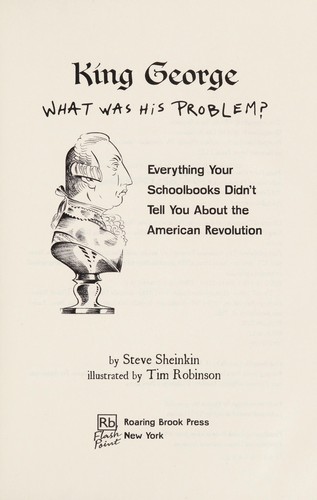
King George Comprehension Questions & Reading Journal
King George has 40 chapters · 210 pages
Free, no sign-up. Customise to reword questions or add your reader’s name.
Inside the journal: 40 chapter pages, one question each · 3 example answers · a cover for your reader’s name
Chapter by chapter Each question is about its own chapter.
In Chapter 1, what problem or conflict begins to grow, and why does it matter to both Britain and the colonists?See all 40 questions ↓
A printable reading journal for King George: one question per chapter, with example answers.
Buy the book on Amazon ↗ (affiliate link)
King George questions by chapter
We know this book well. Every question asks about something that happens in its chapter, a moment, a choice or a character, without giving away what comes next. One question per chapter, across all 40 chapters, and every one is editable before you print. The example answers under 3 of the chapters are the ones printed at the front of the booklet.
-
Chapter 1
In Chapter 1, what problem or conflict begins to grow, and why does it matter to both Britain and the colonists?
-
Chapter 2
In Chapter 2, how does Steve Sheinkin show that small choices can lead to big events?
-
Chapter 3
What do you learn about George Washington in Chapter 3, and how does that change the way you see him?
-
Chapter 4
In Chapter 4, what does King George or the British government want from the colonies, and why?
-
Chapter 5
Choose an important word from Chapter 5 that may be new to you. What does it mean, and how does it help you understand the chapter?
-
Chapter 6
In Chapter 6, how do the colonists react to British rules or taxes? What do their actions tell you about them?
-
Chapter 7
What is one cause-and-effect relationship in Chapter 7? Explain what happened and what it led to.
-
Chapter 8
In Chapter 8, which person or group seems most upset or angry? What details show their feelings?
-
Chapter 9
After reading Chapter 9, what do you predict will happen next between Britain and the colonies? What clues support your prediction?
-
Chapter 10
In Chapter 10, how does the author make history feel exciting or surprising?
-
Chapter 11
What important decision is made in Chapter 11, and what risks come with that decision?
-
Chapter 12
In Chapter 12, how do ordinary people—not just famous leaders—play a part in the story?
-
Chapter 13
How does Chapter 13 show that communication, rumors, or newspapers can change what people think?
-
Chapter 14
In Chapter 14, what does one character do that shows courage? Explain why you think it is courageous.
-
Chapter 15
What is a confusing or unfair rule, law, or order in Chapter 15? How would you feel if you had to follow it?
-
Chapter 16
In Chapter 16, how does the setting affect what happens in the chapter?
-
Chapter 17
What does Chapter 17 teach you about disagreements among the colonists themselves?
-
Chapter 18
In Chapter 18, what strengths and weaknesses does George Washington show as a leader?
Example answer: I think George Washington shows that he is brave because he keeps trying even when things are going badly. He also seems patient because he does not give up on the army. One weakness is that he can make mistakes, like any leader, and his choices do not always work perfectly. This makes him feel more like a real person instead of just a famous name.
-
Chapter 19
What is the main problem in Chapter 19, and what choices do the people have for solving it?
-
Chapter 20
In Chapter 20, what does the chapter show about loyalty? Who is loyal to whom, and why?
-
Chapter 21
What word or phrase in Chapter 21 helps you picture the action? Explain the picture it creates in your mind.
-
Chapter 22
In Chapter 22, how does fear affect the choices people make?
-
Chapter 23
What is one turning point in Chapter 23? Why does it feel important?
-
Chapter 24
In Chapter 24, how does teamwork help the Americans or the British?
-
Chapter 25
After Chapter 25, what do you think will be the biggest challenge for the Patriots? Explain your prediction.
-
Chapter 26
In Chapter 26, which side seems to have the advantage? Use details from the chapter to explain.
-
Chapter 27
What does Chapter 27 show about the hardships of war for soldiers?
-
Chapter 28
In Chapter 28, how does the author help you understand a person who made a difficult choice?
-
Chapter 29
What lesson about perseverance can you take from Chapter 29?
-
Chapter 30
In Chapter 30, what information changes the way the war is going? Why is it important?
-
Chapter 31
How does Chapter 31 show that help from other countries mattered in the American Revolution?
-
Chapter 32
What theme, or big idea, stands out in Chapter 32? Explain how the events in the chapter show it.
Example answer: A big idea I noticed is that people can keep going even when the situation seems almost impossible. The chapter shows people facing danger, worry, and hard choices, but they still try to help their side. I think the author wants us to see that the Revolution was not easy or simple. It took courage and teamwork.
-
Chapter 33
In Chapter 33, what mistake does a character or army make, and what happens because of it?
-
Chapter 34
How do leaders use planning or strategy in Chapter 34?
-
Chapter 35
In Chapter 35, what moment creates suspense? What did you wonder while reading?
-
Chapter 36
What does Chapter 36 show about winning, losing, and not giving up?
-
Chapter 37
In Chapter 37, how do people react when they realize the war may be ending?
-
Chapter 38
What does Chapter 38 make you think about freedom and who gets to enjoy it?
-
Chapter 39
In Chapter 39, how has one important person changed from the beginning of the book?
-
Chapter 40
Looking back at Chapter 40 and the whole book, what do you think Steve Sheinkin wants readers to understand about the American Revolution?
Example answer: I think Steve Sheinkin wants readers to understand that the American Revolution was complicated. It was not just one battle or one famous speech. Many different people made choices that changed history, and some of those choices were risky or unfair. I also think he wants us to see that history can be surprising and exciting.
More by Steve Sheinkin
All 2 →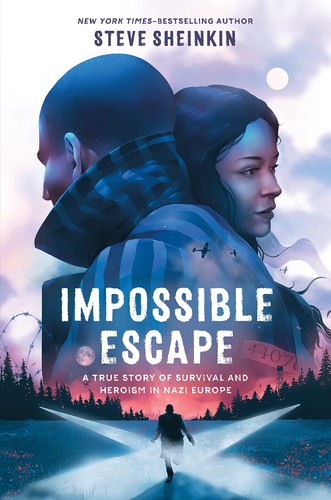
More ready-made journals



How to use this King George reading journal
At home, as a discussion guide
After each chapter your reader writes a few lines on that chapter’s question. Read the answer together at bedtime: it shows what they understood and gives you something real to talk about, without a quiz.
In class, as a novel study
Print a class set (booklets fold from plain letter paper) and use one question per chapter as the reading-response or literature-circle prompt. The example answers at the front show what a full answer looks like.
Homeschool
One booklet covers the whole book, 40 chapters, so it doubles as the reading log for King George. Reword any question before printing to match your reader.
Printing
The booklet PDF prints on ordinary 8.5 × 11 paper: print double-sided (flip on the short edge) at 100%, fold the stack in half and staple on the fold. There is also a one-page-per-sheet PDF and A5 binder pages.
Where the questions come from
Each question is about its own chapter. We know this book well. Every question asks about something that happens in its chapter, a moment, a choice or a character, without giving away what comes next. The questions were drafted with AI from what is known about the book and checked before publishing; every one is editable before you print.
Browse: All books by Steve Sheinkin