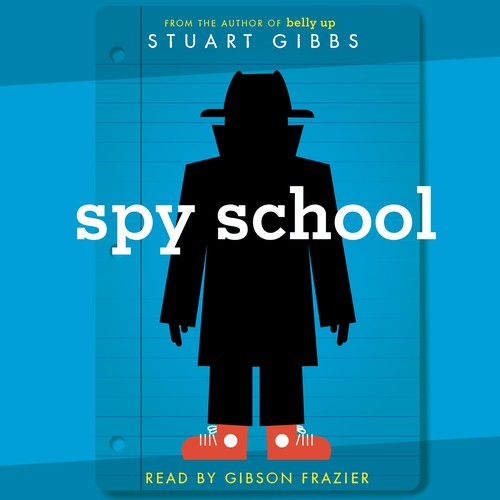
Spy school Comprehension Questions & Reading Journal
4.5 out of 5, (29 ratings on Open Library)
Spy school has 25 chapters · 290 pages
Twelve-year-old Ben Ripley leaves his public middle school to attend the CIA's highly secretive Espionage Academy, which everyone is told is an elite science school.
Free, no sign-up. Customise to reword questions or add your reader’s name.
Inside the journal: 25 chapter pages, one question each · 3 example answers · a cover for your reader’s name
Chapter by chapter Each question is about its own chapter.
What do you learn about Ben Ripley’s normal life before he is recruited, and how does it help you understand him as a character?See all 25 questions ↓
About the book
Twelve-year-old Ben Ripley leaves his public middle school to attend the CIA's highly secretive Espionage Academy, which everyone is told is an elite science school.
Buy the book on Amazon ↗ (affiliate link)
Spy school questions by chapter
We know this book well. Every question asks about something that happens in its chapter, a moment, a choice or a character, without giving away what comes next. One question per chapter, across all 25 chapters, and every one is editable before you print. The example answers under 3 of the chapters are the ones printed at the front of the booklet.
-
Chapter 1
What do you learn about Ben Ripley’s normal life before he is recruited, and how does it help you understand him as a character?
-
Chapter 2
Alexander Hale gives Ben a surprising chance to join spy school. What questions would you want answered before making a choice like Ben’s?
-
Chapter 3
How does Ben feel as he leaves his regular life behind, and what character traits does he show during this big change?
-
Chapter 4
What is your first impression of the Academy of Espionage, and how is it different from a regular school?
Example answer: My first impression is that the Academy of Espionage is exciting but also scary. It is not like a regular school because students are learning spy skills instead of just normal subjects. I think Ben feels amazed because everything is secret and serious. I would be nervous there because mistakes could be dangerous.
-
Chapter 5
Choose one spy-related word or phrase from this chapter. What do you think it means, and what clues in the story help you understand it?
-
Chapter 6
How do the other students treat Ben when he first arrives, and how does that affect the way he sees himself?
-
Chapter 7
What clues show that Erica Hale is an excellent spy student, and why do you think Ben notices her so much?
-
Chapter 8
How does the author make the attack on Ben feel exciting or suspenseful? Use details from the chapter in your answer.
-
Chapter 9
After the attack, what prediction can you make about who might be behind it, and what evidence makes you think that?
-
Chapter 10
Ben faces difficult classes and training at spy school. Which challenge seems hardest for him, and how does he handle it?
-
Chapter 11
What do you learn about Alexander Hale in this chapter, and how does it change your opinion of him?
-
Chapter 12
A theme in this story is that courage does not mean never being scared. How does Ben show courage even when he is afraid?
Example answer: I think Ben shows courage because he keeps going even when he knows he is in danger. He is not the strongest or most experienced person at spy school, but he still tries to do the right thing. To me, that makes him brave in a realistic way. Courage means acting even when your stomach feels scared.
-
Chapter 13
Ben starts to realize that adults may not be telling him everything. What important questions should he be asking now?
-
Chapter 14
The word cover is important in spy stories. What does a cover mean in this chapter, and why would a spy need one?
-
Chapter 15
Which character seems most trustworthy to Ben at this point, and what actions make you think that?
-
Chapter 16
How do Ben and Erica work together to investigate the danger around them, and what strengths does each one bring?
-
Chapter 17
Describe a mistake or risky choice Ben makes. What does he learn from it?
-
Chapter 18
Do you think it is fair for the adults to put Ben in danger as part of a bigger plan? Explain your opinion with reasons.
-
Chapter 19
How does learning more about the enemy raise the stakes for Ben and the other students?
-
Chapter 20
What prediction do you have for how Ben might help stop the enemy, even though he is new to spy school?
-
Chapter 21
Give an example of a skill or lesson from earlier in the book that becomes useful in this chapter. Why does it matter?
-
Chapter 22
How have Ben’s relationships with Erica, Alexander, or other students changed since the beginning of the book?
-
Chapter 23
In a dangerous moment, how does Ben use his brain instead of just strength or fighting skills?
-
Chapter 24
What lesson do you think Ben learns about being a spy and being himself?
Example answer: I think Ben learns that being a spy is not only about fighting or looking cool. He finds out that his intelligence, quick thinking, and honesty can help him survive. I like that he does not have to become exactly like everyone else to be useful. He can be a good spy by using the strengths he already has.
-
Chapter 25
After the ending, what do you predict could happen in Ben’s next adventure, and why?
More by Stuart Gibbs
All 3 →
More ready-made journals

How to use this Spy school reading journal
At home, as a discussion guide
After each chapter your reader writes a few lines on that chapter’s question. Read the answer together at bedtime: it shows what they understood and gives you something real to talk about, without a quiz.
In class, as a novel study
Print a class set (booklets fold from plain letter paper) and use one question per chapter as the reading-response or literature-circle prompt. The example answers at the front show what a full answer looks like.
Homeschool
One booklet covers the whole book, 25 chapters, so it doubles as the reading log for Spy school. Reword any question before printing to match your reader.
Printing
The booklet PDF prints on ordinary 8.5 × 11 paper: print double-sided (flip on the short edge) at 100%, fold the stack in half and staple on the fold. There is also a one-page-per-sheet PDF and A5 binder pages.
Where the questions come from
Each question is about its own chapter. We know this book well. Every question asks about something that happens in its chapter, a moment, a choice or a character, without giving away what comes next. The questions were drafted with AI from what is known about the book and checked before publishing; every one is editable before you print.
Browse: All books by Stuart Gibbs