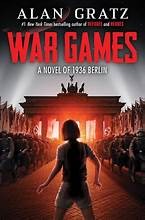
War Games Comprehension Questions & Reading Journal
War Games has 52 chapters · Grades 3–5 · 360 pages
Free, no sign-up. Customise to reword questions or add your reader’s name.
Inside the journal: 52 chapter pages, one question each · 3 example answers · a cover for your reader’s name
Open-ended Thought-provoking questions for any chapter book.
After this chapter, what have you learned so far about the main character and what matters most to them?See all 52 questions ↓
A printable reading journal for War Games: one question per chapter, with example answers.
Buy the book on Amazon ↗ (affiliate link)
War Games questions by chapter
We don’t know this book well enough to ask about its story, so these are open-ended prompts that get a reader thinking about the chapter they just finished: what happened, who changed, what they would do. One question per chapter, across all 52 chapters, and every one is editable before you print. The example answers under 3 of the chapters are the ones printed at the front of the booklet.
-
Chapter 1
After this chapter, what have you learned so far about the main character and what matters most to them?
-
Chapter 2
Which details in this chapter make Berlin and the 1936 Olympics feel exciting, tense, or dangerous?
Example answer: I noticed that the setting feels exciting because the Olympics bring crowds, flags, and famous athletes together. At the same time, it feels tense because Nazi Germany is not a safe or fair place for everyone. The author makes me feel like something important could happen even when people are acting cheerful. That mix makes the chapter more suspenseful.
-
Chapter 3
How are sports shown as more than just games in the chapter you read?
-
Chapter 4
What choice in this chapter seems important, and what might happen because of it?
-
Chapter 5
Which character do you trust more or less after this chapter, and what made you feel that way?
-
Chapter 6
What moment in this chapter shows unfairness, prejudice, or fear under Nazi rule?
-
Chapter 7
How does family influence the main character’s decisions so far?
-
Chapter 8
What new information in this chapter changes how you understand the main problem of the story?
-
Chapter 9
Choose one strong word or phrase from the chapter. How does it help create the mood?
-
Chapter 10
If you could ask the main character one question after this chapter, what would you ask and why?
-
Chapter 11
How does Alan Gratz build suspense in this chapter without explaining everything right away?
-
Chapter 12
What is one small or big act of courage you noticed in this chapter?
-
Chapter 13
Which rule, order, or expectation puts pressure on a character in this chapter, and how does that character respond?
-
Chapter 14
How does this chapter compare the public celebration of the Olympics with the private worries or dangers people face?
-
Chapter 15
What prediction can you make based on clues from this chapter?
-
Chapter 16
How does friendship or teamwork help or hurt a character in this part of the story?
-
Chapter 17
What does this chapter suggest about propaganda, appearances, or trying to make something look better than it really is?
-
Chapter 18
Describe a moment in this chapter when a character had to choose between doing what was right and staying safe.
Example answer: A character had to think about whether to stay quiet or take a risk to help someone. I think this is hard because staying safe can feel smart, especially in a dangerous place like Nazi Germany. Still, doing what is right matters because unfair treatment gets worse when everyone ignores it. I would feel scared, but I hope I would be brave.
-
Chapter 19
What do you notice in this chapter about power and who is allowed to use it?
-
Chapter 20
How do athletes or competition connect to the larger tensions in the story so far?
-
Chapter 21
Which detail from this chapter did you picture most clearly in your mind, and what senses did it use?
-
Chapter 22
How has the main character changed since the beginning, even in a small way?
-
Chapter 23
What secret, risk, or hidden truth matters in this chapter?
-
Chapter 24
How do adults affect what young people can or cannot do in this chapter?
-
Chapter 25
What makes this chapter feel like it belongs in a real historical time and place?
-
Chapter 26
Which character’s feelings or point of view do you understand better after this chapter?
-
Chapter 27
What part of this chapter surprised or confused you, and how could you figure it out?
-
Chapter 28
How does the author show danger through the setting, people’s actions, or the way characters speak?
-
Chapter 29
What lesson about fairness appears in this chapter?
-
Chapter 30
If you were in the main character’s place during this chapter, what would you do the same or differently?
-
Chapter 31
Which event in this chapter feels like a turning point in the story so far?
-
Chapter 32
How does this chapter show that different people respond to Nazi Germany in different ways?
-
Chapter 33
What object, place, or detail in this chapter might stand for a bigger idea?
-
Chapter 34
How does the chapter show a tension between wanting to win and wanting to do what is right?
-
Chapter 35
What evidence shows the main character becoming braver, smarter, or more careful?
-
Chapter 36
What role do rumors, news, messages, or information play in this chapter?
-
Chapter 37
Which character seems to need help in this chapter, and what kind of help do they need?
-
Chapter 38
How does the title War Games connect to what you read in this chapter?
-
Chapter 39
What mood does this chapter leave you with, and what caused that feeling?
-
Chapter 40
What important relationship is changing in this chapter, and how can you tell?
-
Chapter 41
How are bystanders shown in this chapter? What do they do or fail to do?
-
Chapter 42
Which line, choice, or action in this chapter reveals what a character values?
-
Chapter 43
What obstacles are still unresolved after this chapter?
-
Chapter 44
How does this chapter make you think about real history and ordinary people living through it?
-
Chapter 45
What mistake or risky move does a character make in this chapter, and is it understandable?
-
Chapter 46
How does the main character balance personal goals with trying to help others?
-
Chapter 47
What do you think the author wants readers to notice about hate, bullying, or unfair treatment by powerful groups?
-
Chapter 48
Which scene from this chapter would make a powerful illustration, and what would it show?
-
Chapter 49
How have your feelings about one character shifted after this chapter?
-
Chapter 50
What do you think is the biggest danger right now: physical danger, moral danger, emotional danger, or another kind? Explain your choice.
-
Chapter 51
Which theme seems strongest near this point in the story: courage, loyalty, fairness, resistance, or hope? What evidence supports your idea?
Example answer: The theme that seems strongest to me is courage. The characters are surrounded by pressure to act like everything is fine, but some of them still notice what is wrong. Courage in this book does not always mean fighting in a big way. Sometimes it means asking questions, helping someone, or refusing to believe a lie.
-
Chapter 52
Now that you have read this chapter, what do you think the story is asking readers to remember about games, war, and choices?
Discussion questions for after War Games
Bigger questions for when the book is finished, each printed on its own ruled page at the end of the booklet.
- Across War Games, how does the main character’s understanding of courage change because of the 1936 Berlin Olympics and life under Nazi rule? Use examples from the beginning, middle, and end of the book to explain your thinking without simply retelling the whole plot.
- What do you think Alan Gratz is saying about sports, propaganda, and standing up to unfairness in War Games? Would you recommend this book to someone who likes historical fiction, adventure, or stories about brave choices? Explain who should read it and why.
More by Alan Gratz
All 4 →
Similar books for grades 3–5
-
 Karen's New Year.
-
 Kiki and the New Magic
-
 Kiki's Delivery Service
-
 Kristy's Big Day
-
 Kristy's Great Idea
-
 Leon the Extraordinary
How to use this War Games reading journal
At home, as a discussion guide
After each chapter your reader writes a few lines on that chapter’s question. Read the answer together at bedtime: it shows what they understood and gives you something real to talk about, without a quiz.
In class, as a novel study
Print a class set (booklets fold from plain letter paper) and use one question per chapter as the reading-response or literature-circle prompt. The example answers at the front show what a full answer looks like.
Homeschool
One booklet covers the whole book, 52 chapters, so it doubles as the reading log for War Games. Reword any question before printing to match your reader.
Printing
The booklet PDF prints on ordinary 8.5 × 11 paper: print double-sided (flip on the short edge) at 100%, fold the stack in half and staple on the fold. There is also a one-page-per-sheet PDF and A5 binder pages.
Where the questions come from
Thought-provoking questions for any chapter book. We don’t know this book well enough to ask about its story, so these are open-ended prompts that get a reader thinking about the chapter they just finished: what happened, who changed, what they would do. The questions were drafted with AI from what is known about the book and checked before publishing; every one is editable before you print.
Browse: 3rd grade books · 4th grade books · 5th grade books · All books by Alan Gratz